0
0

This has been a year of momentous anniversaries for India, three of them terribly tragic The 25th anniversaries of the world's worst industrial accident, when a deadly gas leaked from a Union Carbide factory in Bhopal, killing over 3,000 people; the assassination of Indira Gandhi; and the horrific communal riots that followed the assassination in which about the same number of Sikhs were butchered in the capital city.
Yes, 1984 was a fateful year for India. But there is one anniversary, the 38th, which is being remembered here in celebration and triumph The Indian victory in the 1971 Indo-Pak war and the creation of Bangladesh.
On Dec 16, 1971, Gen Jagjit Singh Aurora, who was in charge of the Indian army's Eastern Command, flew to Dhaka, to accept a signed instrument of surrender from Gen A.A.K. Niazi, the commander of the Pakistani troops in East Pakistan. The black-and-white grainy picture of that surrender ceremony is vividly etched in the memory of my and my parents' generation. It was a defining moment in modern India's history.
That same evening, Indira Gandhi made an announcement in the Indian parliament. 'Dhaka is now the free capital of a free country,' she said to loud cheers. It was her finest hour.
There was another reason to celebrate. The war was also a triumph for our secularism. The general who accepted the surrender, Aurora, was a Sikh, the general who was in charge of that particular operation in East Pakistan, Jacob, was a Jew, and the army chief, Manekshaw, a Parsi. I — and I am sure countless other Indians — felt proud of that unique religious composition.
For Pakistan, needless to say, it was the worst humiliation of its young history, a humiliation that it has still not come to terms with. Objective analysts would say, with good cause, that a Pakistan separated by a huge swathe of Indian territory, was not viable in the first place. Differences in language and culture between the two wings made it even less viable.
Writer Salman Rushdie described it with cruel accuracy 'A bird with two wings and no body.' Religion was the only binding factor. It was not enough.
I have a somewhat different take on the matter. And it is closely connected to democracy and representative government. In the 1950s and going into the 1960s, there was a separatist movement in the southern Indian state of Tamil Nadu. At issue, were two major demands by the Tamils The primacy of the Tamil language and an end to the domination of Brahmins.
This movement has to be seen in the context of the attempt by the Hindi fanatics to thrust that language down the throats of the entire country, as the 'national' tongue. The biggest resistance came from the Tamils who had a language that was as rich, if not richer, than Hindi.
It was also entirely different from Hindi, the only common factor being Sanskrit, which was in any case a 'dead' classical language. Hindi was as different from Tamil as was English. Why should we be forced to learn another language (if you added English, that meant three languages), while Hindi-speakers needed to learn only Hindi, argued Tamilians. Anti-Hindi riots broke out in Tamil Nadu.
The centuries-long Brahmin domination over the far more numerous lower castes was also an important factor in the agitation, which came perilously close to a demand for an independent Tamil Nadu. Ethnically, too, the Tamil 'Dravidians' were very different from the northern 'Aryans'.
There seemed to be little meeting ground between the 'northerners' and the 'southerners'. However, the healing power of democracy came to India's rescue, preventing a breakup of the nation.
The non-Brahmin and anti-Hindi agitators went to the polls and were elected to power. The separatist movement died down, the Tamil language got its rightful place and the Hindi fanatics were chastened.
Let's now turn to Pakistan. The demands that Sheikh Mujibur Rehman made on behalf of the Awami League were much less extreme than those of the Tamils. What's more, in the 1970 Pakistan general election, his party won a major victory. But Zulfikar Ali Bhutto did not like the idea of being in the opposition, with Rehman as the prime minister.
Rehman was later arrested. That is the moment an independent Bangladesh was born. The real villain in the breakup of Pakistan was not Indira Gandhi, not even Yahya Khan. It was Bhutto. Democracy could have maintained a united Pakistan, at least for some more time. Bhutto and Yahya Khan refused to heed the voice of the voter and played into Indira Gandhi's hands.
Ever since, Islamabad has sought revenge. It is alleged that Sikh militants were given training and arms in Pakistan. The same scenario was repeated with the Kashmir militants. New Delhi retaliated in like fashion, helping violent elements in Sindh and dissident forces in other parts of Pakistan.
It has been a deadly and ruinous tit-for-tat game, the origin of which can be traced back 38 years ago, when Pakistan split and Bangladesh came into being.
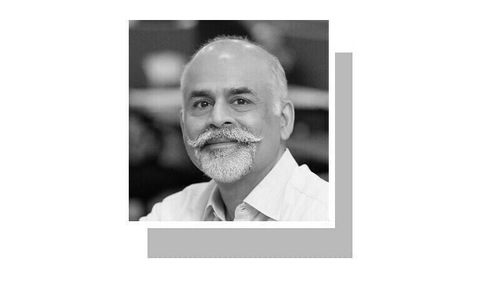
The writer is the former editor of Reader's Digest and Indian Express.