The Storyteller: Saadat Hasan Manto (May 11, 1912 – January 18, 1955)

| 6th May, 2012
16
Send to Kindle

A young Manto, in thought. He said about his writing: “I accept [my characters] with all their vices, their disease, their abusiveness, their peevishness” – Saadat Hasan Manto. – Photo by Whitestar

May 11, 2012 marks Sadat Hasan Manto’s birth centenary. To celebrate the occasion Books&Authors invited some of the most well-known names of Urdu literature to share their thoughts on a writer Zaheda Hina terms the “creative conscience of the subcontinent”.

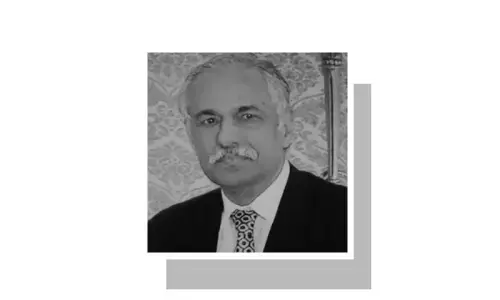
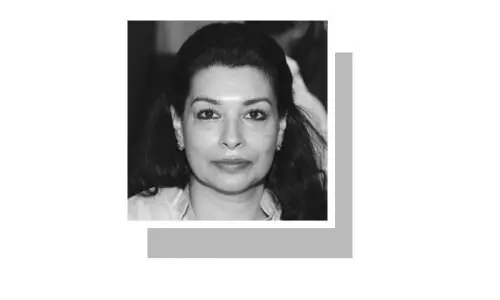
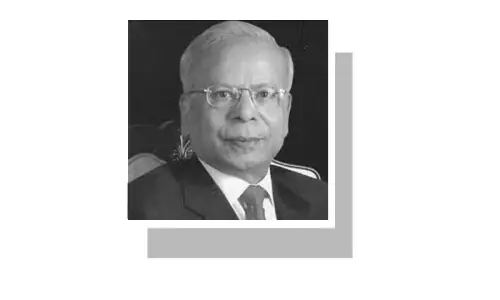
In his time, Manto was much loved and loathed, but he was never ignored. Fifty-seven years after his death Manto still causes passionate debate. It was evident in the discussion where poet and writer Fehmida Riaz and columnist Zaheda Hina, novelist and short story writer Hasan Manzar, and critic Mohammad Ali Siddiqui gathered to talk about how Manto wrote about women, Partition, his association and subsequent falling out with the Progressive Writers’ Movement, and his legacy.

The discussion was moderated by Wusatullah Khan and attended by journalists, publishers and artists who also shared their thoughts on arguably the subcontinents greatest short story writer.

A conversation about Manto

Wusatullah Khan (WK)
We are here to remember a personality I am finding hard to describe. I don’t know which box or compartment to place him in.
Should we talk about a carefree young man who was not interested in formal education? Who failed his matric education but who was such a fan of English, French and Russian literature that he did not hesitate to steal books from railway station bookshops? He liked Victor Hugo so much he ended up translating him. He did the same with Oscar Wilde and Chekhov. Then he thought, why not write himself. So, at the age of 19, he wrote his first story in the context of the Jallianwala Bagh massacre and became hooked.

Because he was in a rush to die, in the next 24 years he left behind 22 collections of short stories, five collections of radio dramas, three of essays, two of sketches, one novel, seven or eight film scripts, three pretty decent jobs, many court cases on the charges of obscenity, personal fights with progressives and non-progressives, and at the age of 42, left this world.

Saadat Hasan Manto is a confusion: was he a realist, anarchist, sadist, masochist, psychologist, misfit?
 
Mohammad Ali Siddiqui (MAS)
Manto was a literary world unto himself. He was breaking news in Urdu fiction. He was a departure from both Sir Syed’s movement and the Romantic movement and in a hypocritical society he loved the ‘bad guys’ and searched for humanity in them. No other writer has been able to destroy and ridicule what the respectable classes stand for the way Manto has.

That is why I feel that Manto was the first rebel in our literature. He used to call himself a rebel, a thinker, a comrade. The distance that he traveled in 11 or 12 years — from the age of 16 or 17, till he was 28 — perhaps no other writer of Urdu fiction did. He is the only short story writer in Urdu who placed Urdu fiction at an international level.

Continue reading the discussion:

Manto saw women the way he saw men: Panelists discuss the portrayal of women in Manto.

How does Manto stand apart from his contemporaries?: Panelists try and understand what makes Manto different from fellow writers who were addressing similar themes.

Manto didn’t have the heart to stay behind in India: Why, if Manto was doing well in India, did he move to Pakistan?

Society’s biggest critic would have to be progressive: Was Manto a part of the Progressive Writers’ Movement or was he boycotted by the organisation? The panelists and the audience discuss the issue.

How relevant is Manto today?: Panelists share their thoughts on Manto’s legacy.

I accept [my characters] with all their vices, their disease, their abusiveness, their peevishness: Intizar Husain discusses realism in Manto

Manto remembered: Contemporaries recall meeting and seeing Manto

COMMENTS

  1. I read Minto first in my College days in 1949….I have read him yet again many times
    stories like Thanda Goshat could only be written by him.
    Stottes about partition was his gift to sub-continet readers.
    There can never be another Minto.
    May God rest his soul in Peace amen.
    Samad

  2. A realist who could explain very intricate matters in very simple words.Read his "KALI SHALWAR" and you will understand what I mean.He hated hypocrisy.

  3. i do not feel writers should follow him .
    it was his personal way of thinking, which he should not try to make public. if he knows that he was a rebellion,it may be ok for him , but one should not try to make people think his way. in terms of moral values and others we have a system in place(our beautiful religion) showing us sacrifice, morality , love, etc.
    we do not MANTOISATION of society or literature.

  4. conflicted……..Look for inner depth of story
    Read …Kholdo…u will cry….Partition time atrocities

  5. Lakshmidhar Malaviya

    Beauty is some thing which perpetually goes on to rejuvinate itself! The same applies to artits, their media be Word, colour pigment or any thing else. At this my middle age of 78 years, I can vividly remember reading, with fascination, Manto's only novella "Baghair Unman" 60 years ago, in Allahabad. I don't think that he was born on such and such date, or that he belonged to India or to Pakistan – or "the subcontinent! For he is born in the next room, every time I pick up one of his books and re-read, with unabated fascination any of his wonderrful short stories – here in this remote Kyoto village, served by just three buses in a day! Needless to add, I would relish and admire him till my last.

  6. It is nice that we honor a great writer who made us think and see more of the world around us.

  7. He was tried for "Fehash" writing. He said that his writinis is as obsene as the society is. His stories fall more into realism than romanticism, His characters are very real, and as un-biased as geometrical images. He lived on Beadon Road, near to famous the Mall Road of Lahore. A great writer.

  8. Manto was a great short story writer of Indian sub continent,He is still one of the best short story teller of the century.

  9. Minto's are born once in a CENTURY. He had the brilliance and style can not be matched by anyone. He was a model of excellence and wisdom.

  10. He could be the satirist Miguel Cervantes of Pakistan (who lost his arm in the sea battle between the Turks and Spain, thus was against going to war for the rich in society). Anyone who loves Victor Hugo is an advocate for the underdog and the misunderstood. Hugo, a stout republican, was the French version of Charles Dickens, but with a greater talent for description.
    Romanticism only makes sense for the leisure class, and woman who have nothing but time for their flights of fancy. Although I never have heard of Sadaat Hasan Manto he seems akin to the existentialists Jean Paul Sarte and Albert Camus (who was actually Algerian). Some people must have made that comparison. Depression and Existentialism are brothers. What is the use of living in this world? People who suffer depression (for whatever reason) feel the people in the world have failed it. Mao Ze-Dong, loved the novels – tales of the bandits, the women, the heroes and war lords of China's Middle Kingdom. Those with the courage to fight back, but to know the difference between right and wrong. The Gypsies of Europe (who probably were from India by way of Persia) said God gave them the right to steal for 1,000 years. Perhaps those who have nothing have that right – to steal books. Books are another world, the world we didn't know about.

  11. I look at the minimalist movement in-vogue right now in English literature, championed by the likes of Amy Hempel and Chuck Palahniuk, and it is hard to ignore the fact that Manto was doing the exact same thing in Urdu six decades ago. The man was way ahead of his time, not just in terms of urdu literature, but world literature in general.

  12. I think Manto belonged to India as much as he belonged to Pakistan. Personally he didn't want to move to India as he was making good money in Bombay writing for films and the atmosphere in Bombay was fairly liberal compared to North India or Pakistan. But he moved as his family had moved to Pakistan and he wanted to join them. His move there triggered his downfall during which he wrote some of his most intense short stories. Some of those stories also landed him in trouble with the law.
    All said and done, the Indian sub continent lost one of its most illustrious writers at a very early age.

    • Manto was in a way like the Russian novelist, Sholokov, who won a Nobel Prize for this novels and short stories about the Russian Revolution (of 1917) all Russia and Ukraine were trapped in. Professional writers, famous leaders and ordinary citizens must write about the epics of history that changed their plans for the future. Books like these make interesting reading for those with settled lives after the smoke of war has cleared.
      Men would rather die than change their minds. Manto must have chosen not to be involved in other peoples' arguments. People must live first and foremost. Let us just agree that God chooses to help in whatever ways He wants, not necessarily in the ways We want, or even expect. The idea is for man to survive ethically in this world, and to reserve the way things Should Be for the next world. When ethics are breached by greed, there is a crack in the dam. Everyone suffers. The Holy Ones are worried that they won't reach Paradise because of the things we do.

  13. I read him every morning and marvel….at his congenital inability to pass judgement…the evocative sexual imagery that puts Hustler and Playboy to shame…his innate humanity…his economy of words… the lack of pretention. What a writer! what a man!!

    • Agree completely. A great author that remains unrivaled.

    • I am afraid hustler and Playboy does not provide for any analogy with Manto's work. These contemporary popular magazines are decadent for they feature sex for sex sake , the psychological dimensions which may include sex as a release of spiritual anxiety are never explored. Manot's work, on the other hand is subtle, the characters in manto's come face to face with the tragedy of entertaining an ideal notion of love and a pragmatic calling of flesh. In the end the reader is often left questioning his/her identity by putting sexuality in sociological perspective and as a need which is ubiquitous be it mosque or brothel.