ALTHOUGH no breakthrough was achieved at the UN General Assembly, there has been some progress where finding a negotiated solution to the US war on Iran is concerned.
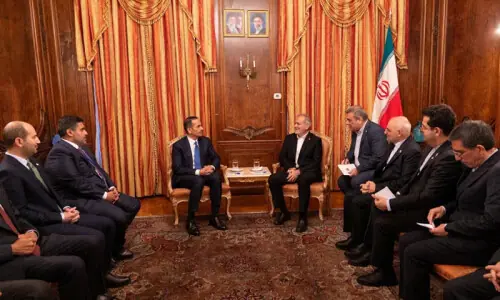
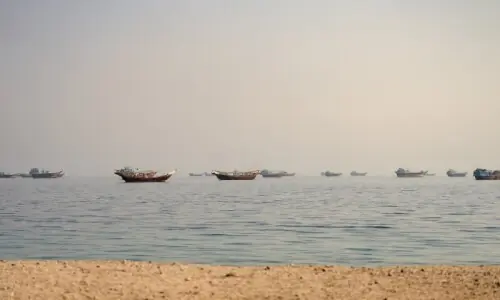
For example, both the American and Iranian delegations held talks mediated by Qatar, while the Iranian president told Prime Minister Shehbaz Sharif that Tehran was still committed to the Islamabad MoU. Moreover, other reports indicate that both the US and Iran are looking for an off-ramp, with Tehran offering to open the Strait of Hormuz for marine traffic if Washington ends its blockade of Iran. The key question is: who will blink first in this battle of wits, as neither side will want to appear weak? Now it is up to both sides — as well as the states mediating this conflict — to take forward the progress made in New York.
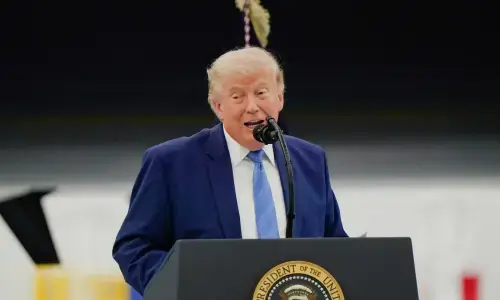
As the US, along with Israel, initiated this aggression, it should take the first step and offer confidence-building measures to Iran in order to de-escalate the situation and come to a long-term settlement. Though White House officials have said Iran is ‘desperate’ for a deal, the fact is that high fuel prices are also hurting the Trump administration at home. An unpopular war coupled with high inflation is not likely to have a positive effect on the Republicans’ chances going into November’s midterm elections. In a meeting on the UNGA sidelines, Mr Trump’s Gulf allies reportedly asked him for a post-midterm strategy regarding Iran. Perhaps something can come out of the interactions at the UN. However, the talks must not be a ruse to open Hormuz and to merely suspend hostilities and stabilise oil prices until the US midterms. There are some indications that the Trump administration may be considering kinetic action after the elections. It would mean a disastrous new confrontation in the Middle East. Hopefully, wiser counsel will prevail in Washington.
The way forward seems simple. The US must approach Iran with sincerity, and the talks must not be a smokescreen for further military action later. The blockade of Iran should be lifted and its funds released to enable a longer-term peace. Tehran, on its part, should commit to keeping Hormuz open in the interest of both its neighbours and the wider international community, while also refraining from targeting the Gulf states. Also, any new agreement should cover all fronts: Gaza, Lebanon and Yemen. Although these are separate conflicts, they are also interlinked as Iranian allies are involved in all of them fighting Israel, the US and Saudi Arabia. Hence, a peace treaty with Iran alone may not last unless there is also calm in other regional theatres, while there is a particular need to rein in Israel’s murderous attacks on regional states.
Published in Dawn, September 27th, 2026