R4 bloc, European powers discuss developments in the Gulf in Istanbul meeting
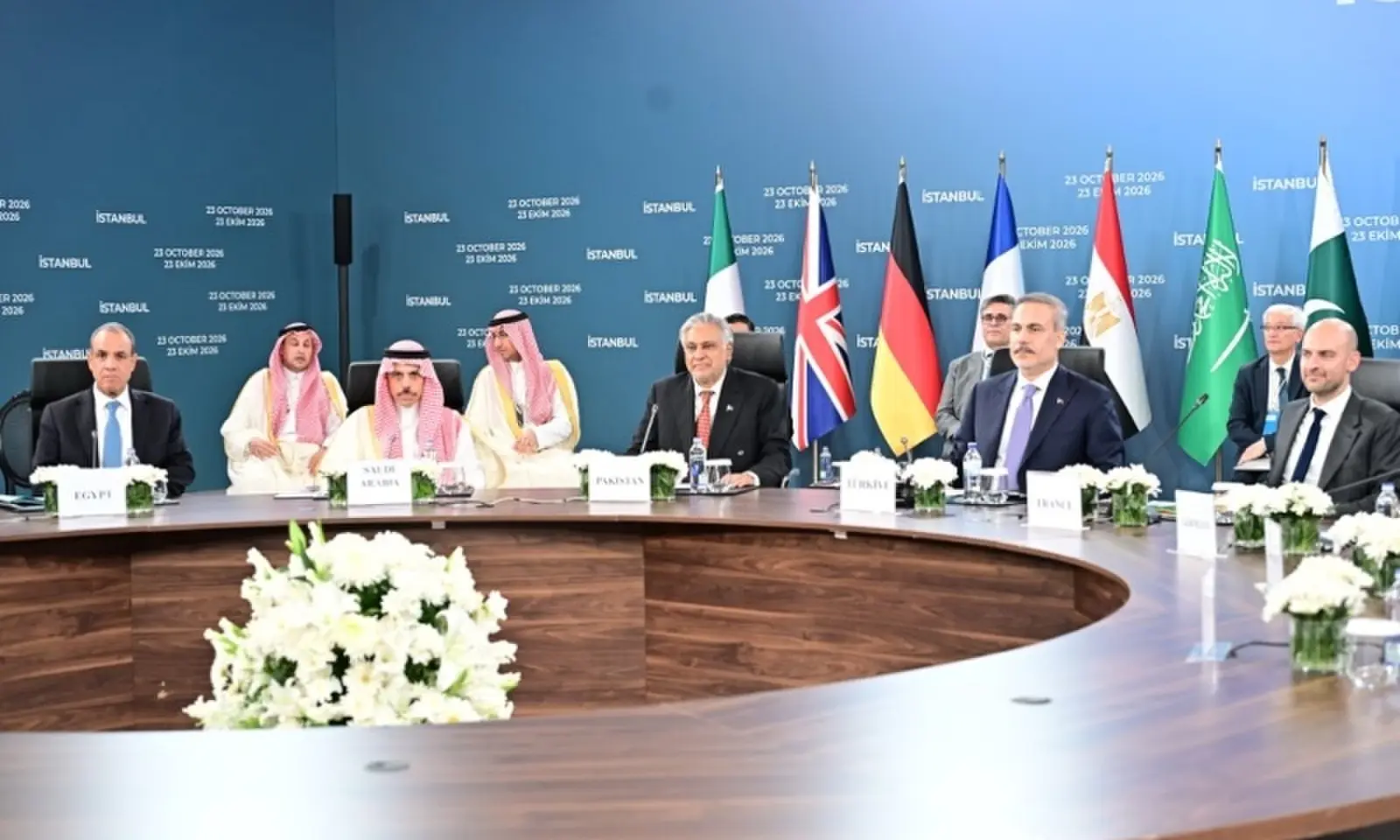
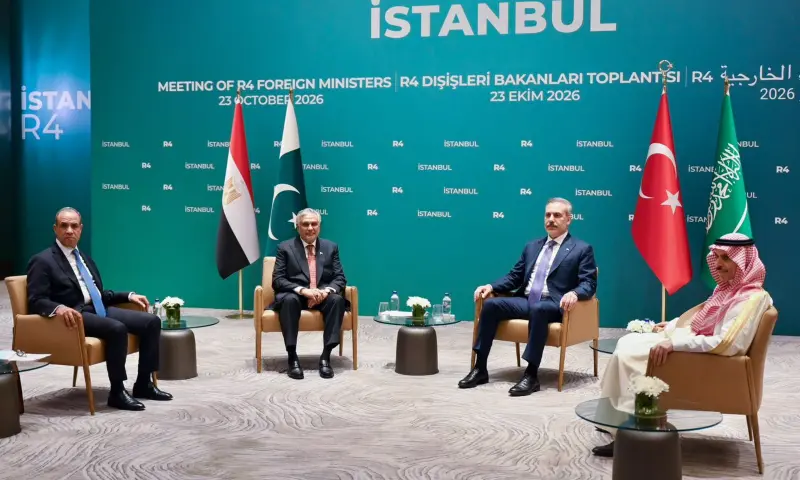
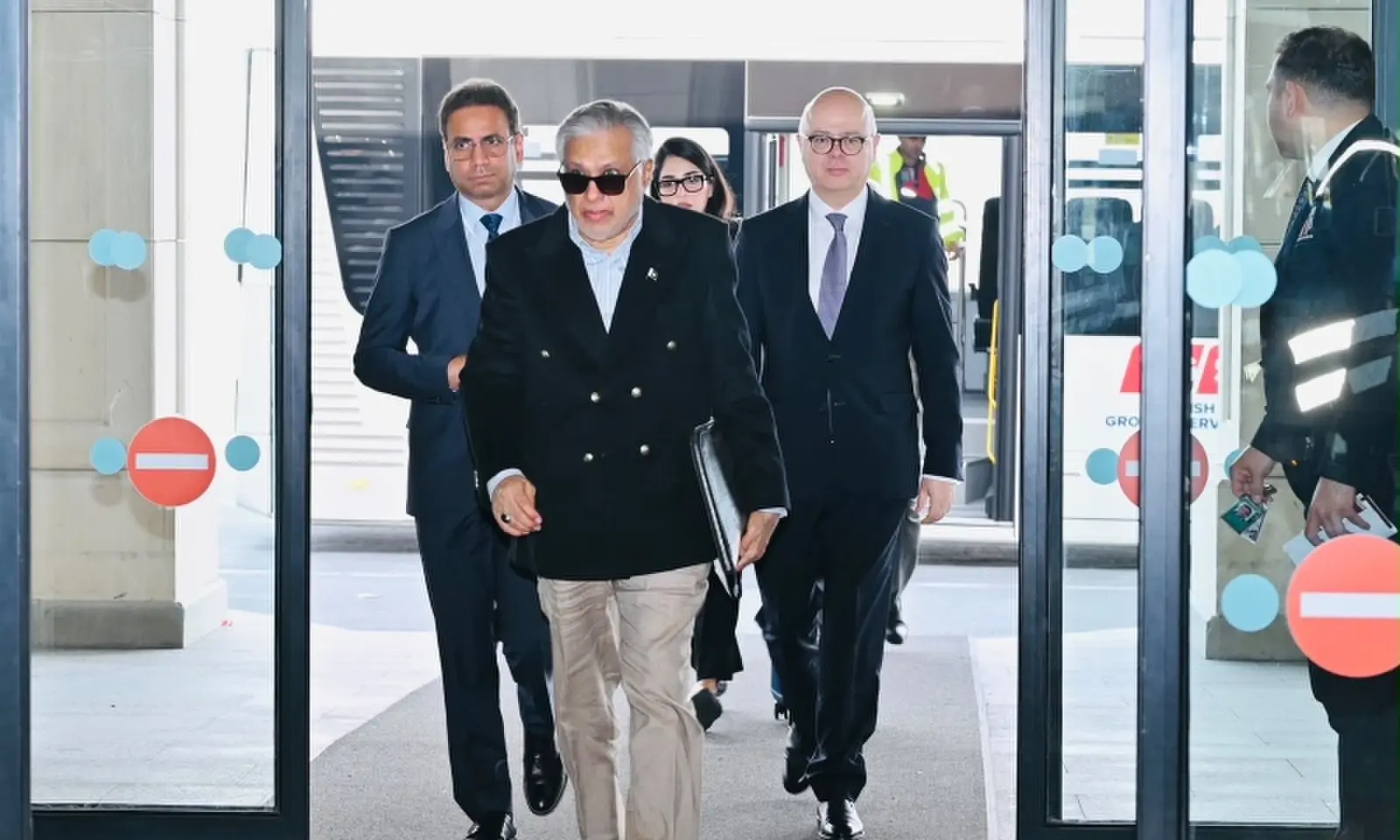
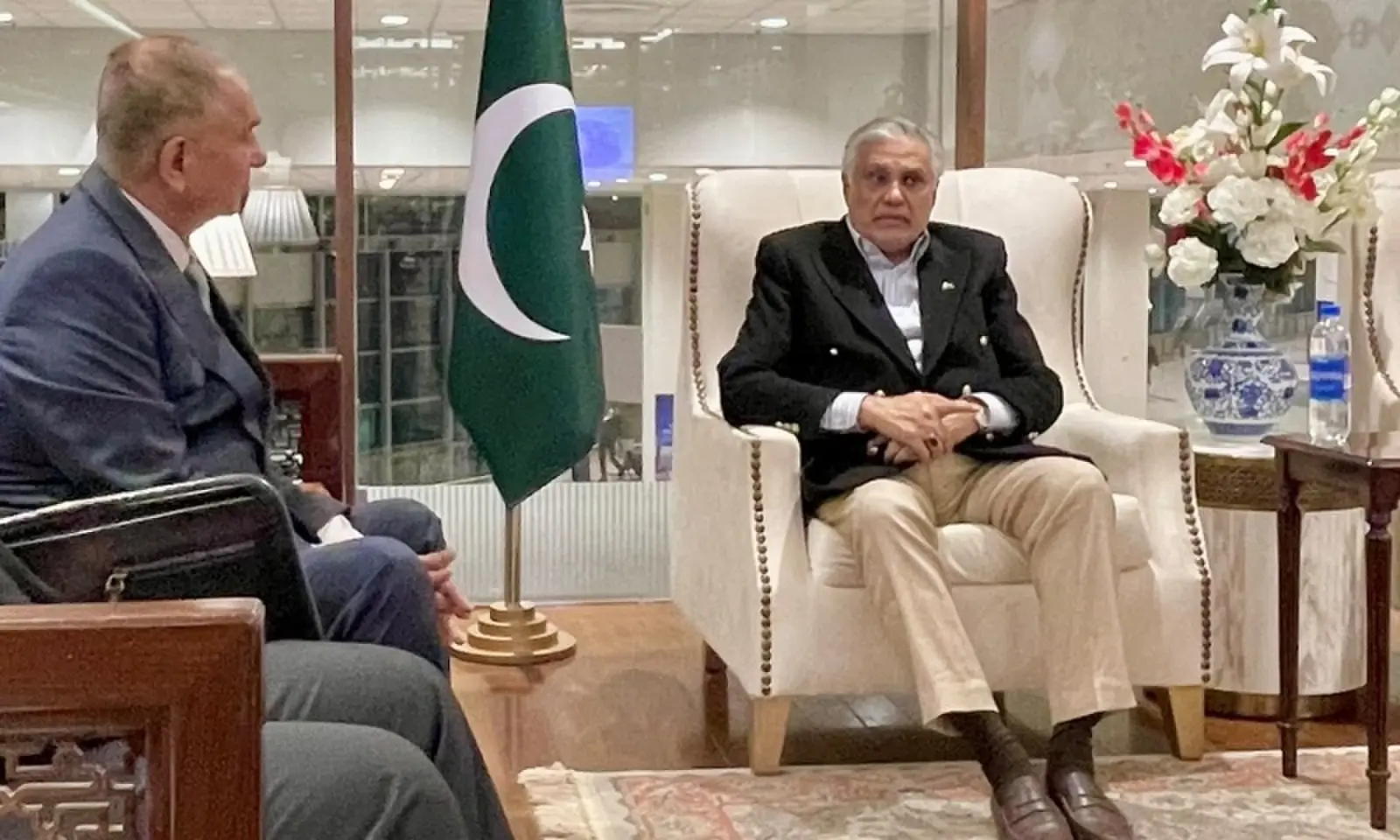
Developments in the Gulf region amid the US-Israeli war on Iran came under discussion as the R4 foreign ministers — Pakistan, Egypt, Saudi Arabia and Turkiye — met with their counterparts from France, Germany, Italy and the United Kingdom.
The R4 group, comprising Pakistan, Egypt, Saudi Arabia and Turkiye, emerged in March and has been focusing on regional security and mediation efforts between the United States and Iran.
According to the Foreign Office (FO), Deputy Prime Minister and Foreign Minister Ishaq Dar participated in the first meeting between the R4 and France, Germany, Italy and the UK.
“The meeting provided an opportunity for exchange of views on regional developments in the Gulf region, their social and economic impacts, and the urgent need to foster diplomatic engagement to resolve regional challenges of peace, security and stability,” it said.
“Dar briefed his counterparts on the diplomatic and mediatory role Pakistan continues to play in de-escalating tensions, preventing resumption of hostilities and promoting peace. All ministers agreed for continued engagement in this format,” it said.
The R4 bloc also held a separate meeting. According to the FO, Dar participated in the sixth R4 foreign ministers’ meeting alongside Turkish Foreign Minister Hakan Fidan, Egyptian Foreign Minister Badr Abdelatty, and Foreign Minister Prince Faisal bin Farhan Al Saud of Saudi Arabia.
The ministers reviewed developments in the region since their last meeting in New York in September, with “particular focus on the situation in the Middle East and related security challenges and conflicts”, the FO said.
They expressed solidarity with Saudi Arabia and reaffirmed their support for its sovereignty and territorial integrity.
The FO added that the ministers also condemned the Houthi attacks targeting Saudi Arabia and underscored the importance of respecting state sovereignty.
“They discussed ways to strengthen regional coordination and advance diplomatic efforts to promote lasting peace, security, and stability,” it said.
A joint statement issued after the meeting detailed that the ministers particularly condemned Houthi strikes on civilians and civilian infrastructure in Saudi Arabia, as well as attacks carried out against commercial shipping in the Red Sea and the Bab al-Mandab.
“They expressed their full solidarity with the government of Yemen and the Kingdom of Saudi Arabia, and called on the Houthi militia to immediately cease all military actions, threats and attacks, and to return to the political process in good faith,” the statement said.
Regarding the US-Iran conflict and the Strait of Hormuz, they stressed the “urgent need” to address this conflict only through dialogue and diplomacy, as well as to prevent the targeting of civilians and civilian infrastructures, including vessels.
They expressed support for the Islamabad Memorandum of Understanding and welcomed continued diplomatic efforts to prevent further escalation and reaffirmed their commitment to a lasting negotiated solution, the joint statement said.
The participants further underscored the “vital importance” of freedom of navigation, permanent maritime safety and security and safeguarding navigational rights and freedoms.
“They noted that disruption of sea lanes threatens the security and prosperity of all, through blocking global supply chains, flows of energy, fertiliser and food, impacting vulnerable populations in the region and beyond, and thus, requires collective efforts by the international community to address these challenges.”
The ministers also rejected any measures or restrictions that impair lawful navigation and called for the swift and full resumption of safe, secure and unimpeded passage through the Strait of Hormuz, the statement said, adding that the participants agreed to maintain close consultation and coordination on the afore-mentioned matters.
Moreover, they emphasised that the Israeli occupation in Gaza constituted the “fundamental source of instability” in the region and beyond, and that Israeli policies creates a “deep sense of injustice in global public opinion”.
They called for the early implementation of the two-state solution in Palestine, in accordance with the relevant UN resolutions.
“They reiterated their support for the legitimate rights of the Palestinian people, including their inalienable right to self-determination and to establish an independent, sovereign, viable, and contiguous State of Palestine on the basis of the 4 June 1967 lines, with East Jerusalem as its capital, in accordance with relevant United Nations Security Council resolutions in order to achieve comprehensive peace in the Middle East,” the statement said.
The ministers called for an “urgent end” to the ongoing Israeli violence, as well as attempts to change the legal and historical status of Jerusalem, and to bring an end to further destruction and humanitarian tragedy in Palestine.
They condemned all the previous and current settlement activities in the West Bank and Jerusalem, as well as the settler violence against Palestinians and underlined the urgent need for uninterrupted flow of humanitarian aid to and reconstruction in Gaza.
Bilateral meetings
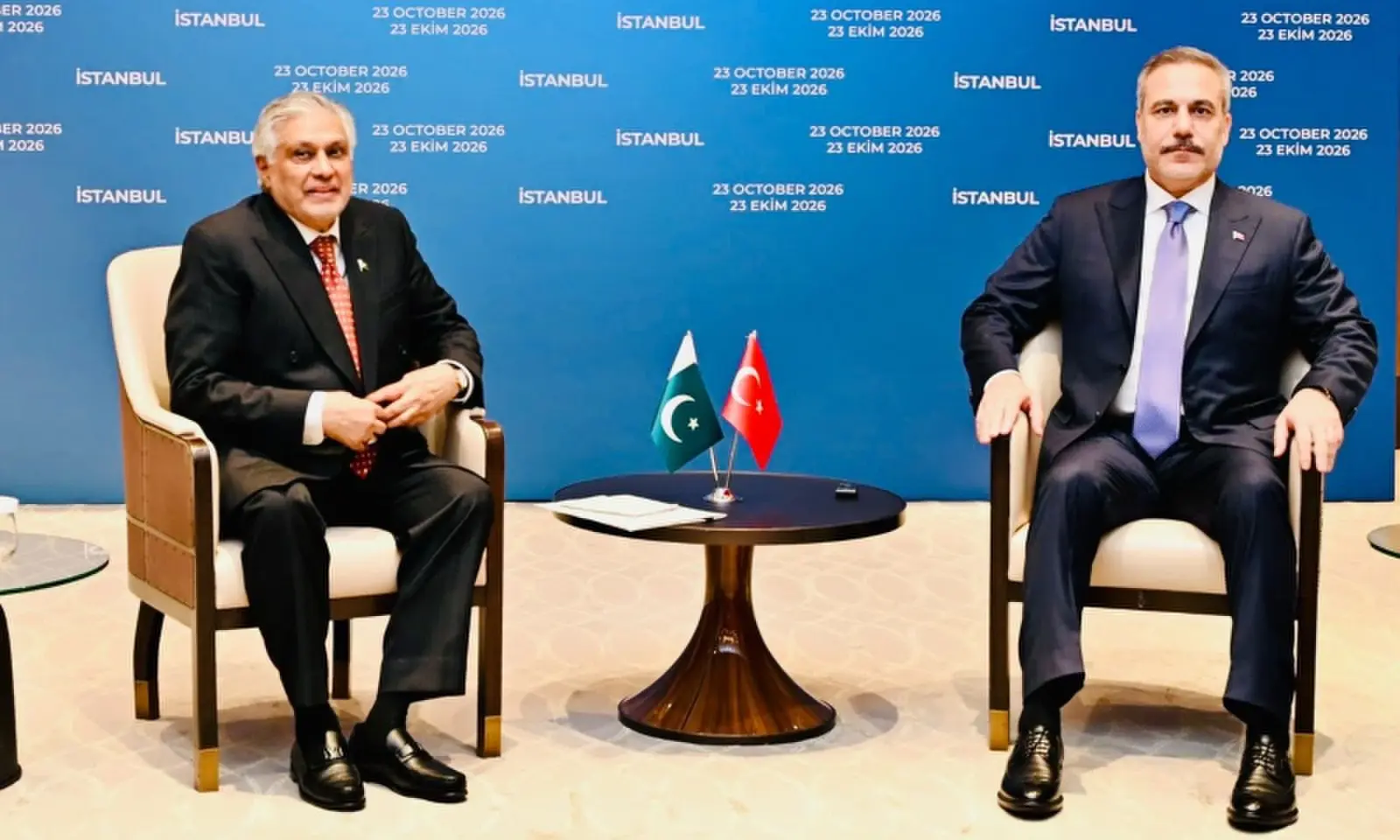
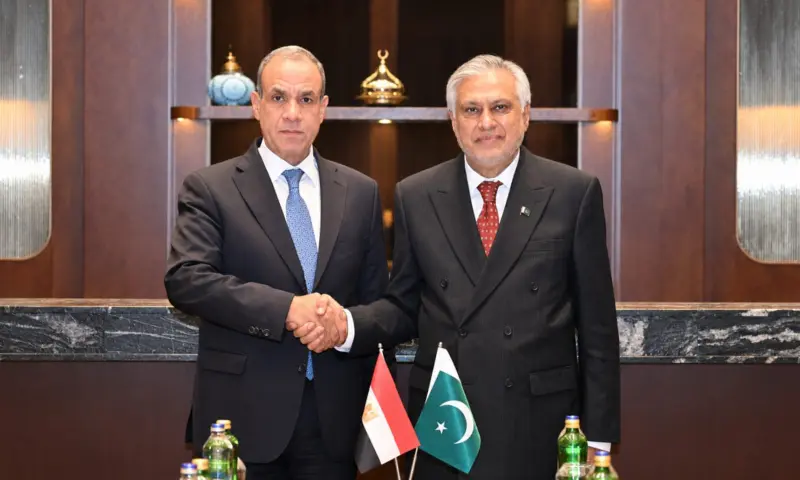
Dar earlier held bilateral meetings with the Turkish and Egyptian foreign ministers, on the sidelines of the R4 meeting and a meeting between the R4 and European diplomats in Istanbul, the FO said.
In a post on X, the FO said that Dar met with Fidan ahead of the ministerial meeting, thanking him for hosting the meetings. The pair discussed bilateral relations and regional developments, particularly the situation in the Middle East and Palestine.
“They expressed concern over threats to regional stability and underscored the importance of dialogue, diplomacy and coordinated efforts to promote regional peace and security,” the FO statement said.
Additionally, Dar and Fidan strongly condemned Houthi attacks on Saudi Arabia and reaffirmed their commitment to close coordination on regional issues, including under the Makkah Defence Agreement.
“Both leaders reaffirmed their commitment to further strengthening the longstanding bonds of friendship and brotherhood between Pakistan and Turkiye, and to deepening cooperation across all areas of mutual interest, both bilaterally and in multilateral fora,” the FO added.
Later, the FO said that Dar also met with Egyptian FM Abdelatty on the sidelines of the ministerial meeting, where the two exchanged views on regional and international developments.
In particular, they discussed the situation in Palestine and the Middle East, and underscored the importance of “sustained dialogue and diplomacy” in addressing challenges in the region.
The two reaffirmed the “longstanding and fraternal ties” between Pakistan and Egypt, and highlighted the importance of sustained high-level engagement to further advance bilateral relations, the FO statement said.
“They agreed to impart greater momentum to cooperation across a range of areas, including trade, business-to-business linkages, agriculture, pharmaceutical, connectivity, renewable energy, defence, and people-to-people exchanges,” the FO added.
The ministers also reaffirmed their commitment to continued consultations and closer coordination under the R4 framework, as well as on matters of mutual interest, it said.
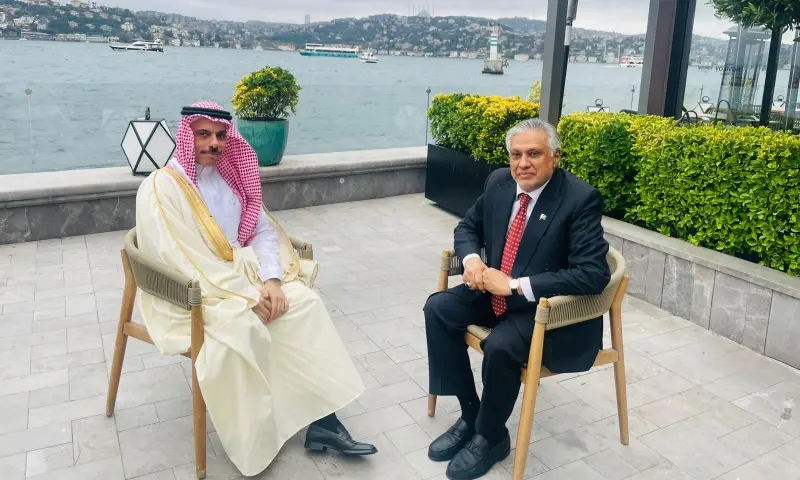
The deputy premier later had a “warm and cordial meeting” with Saudi FM Prince Faisal bin Farhan, where he expressed Pakistan’s full support for the sovereignty and territorial integrity of the kingdom.
“The two leaders reaffirmed the enduring strength of the fraternal ties between Pakistan and Saudi Arabia and their commitment to further strengthening their strategic partnership through close cooperation across all areas of interest and regular consultations at all levels,” the FO said.
They also underscored the “special bond” between their countries, reinforced by their bilateral Strategic Mutual Defence Agreement and the Makkah defence agreement between Pakistan, Turkiye and Saudi Arabia; as well as their shared commitment to regional peace, security and stability, it added.
Separately, DPM Dar met with German Foreign Minister Johann Wadephul on the sidelines of the meeting and expressed the desire to further strengthen bilateral ties “through sustained engagement and cooperation across multiple areas of mutual interest”, the FO said.
According to the FO, the two ministers discussed relations between Pakistan and Germany and exchanged views on regional and international developments. They stressed the importance of dialogue, diplomacy and sustained international engagement to promote peace and stability and to address the evolving challenges in the region.
Dar “welcomed the constructive engagement” of Germany, France, Italy and the UK with the R4 framework, the FO said, adding that he underscored the value of “continued consultations and diplomatic coordination on issues of shared concern”.
Talks to revolve around Hormuz, Saudi Arabia
British Foreign Minister Ed Miliband’s office said the talks would essentially revolve around “the Strait of Hormuz and the situation in Saudi Arabia”.
It said Miliband “will advocate for a diplomatic solution to the [Hormuz] crisis that restores full navigational rights and freedoms”.
He will also stress “how Iranian tactics are being replicated across the region, with attacks on Saudi Arabia further destabilising the region and increasing pressure on vital waterways and global chokepoints, such as Bab el-Mandeb and the Suez Canal”, it added.
France confirmed the talks on “the Iranian crisis in its various ramifications”, hailing it as a first “in this format … against a backdrop of extreme instability and uncertainty in the region.”
The meeting will aim to “strengthen coordination between Europeans and Middle Eastern countries in the face of crises that we did not choose and that affect us all,” the French foreign ministry said.
Fidan is expected to emphasise the need for a diplomatic solution to the war between the United States and Iran, the importance of freedom of navigation in the Strait of Hormuz and Bab el-Mandeb, and reiterate Turkiye’s support for Saudi Arabia’s security against attacks by Yemen’s Houthi rebels under the Makkah defence agreement signed by Islamabad, Ankara, and Riyadh, the sources said.
The Makkah defence pact, signed on Aug 7, aims to strengthen collective deterrence and empower its signatory states to treat an attack against one of them as an attack against all of them.